CELEBRATING STRENGTH & RESILIENCE

Indigenous people lead and thrive across the United States. In this virtual exhibit, IllumiNative and Indigenous Photograph celebrate the strength and resilience of Indigenous peoples and make visible the issues that impact Indigenous people every day.

Utilizing the findings of the Indigenous Futures Survey, these talented Indigenous photographers and creatives have brought their perspective and storytelling to show the richness and diversity of Native communities.
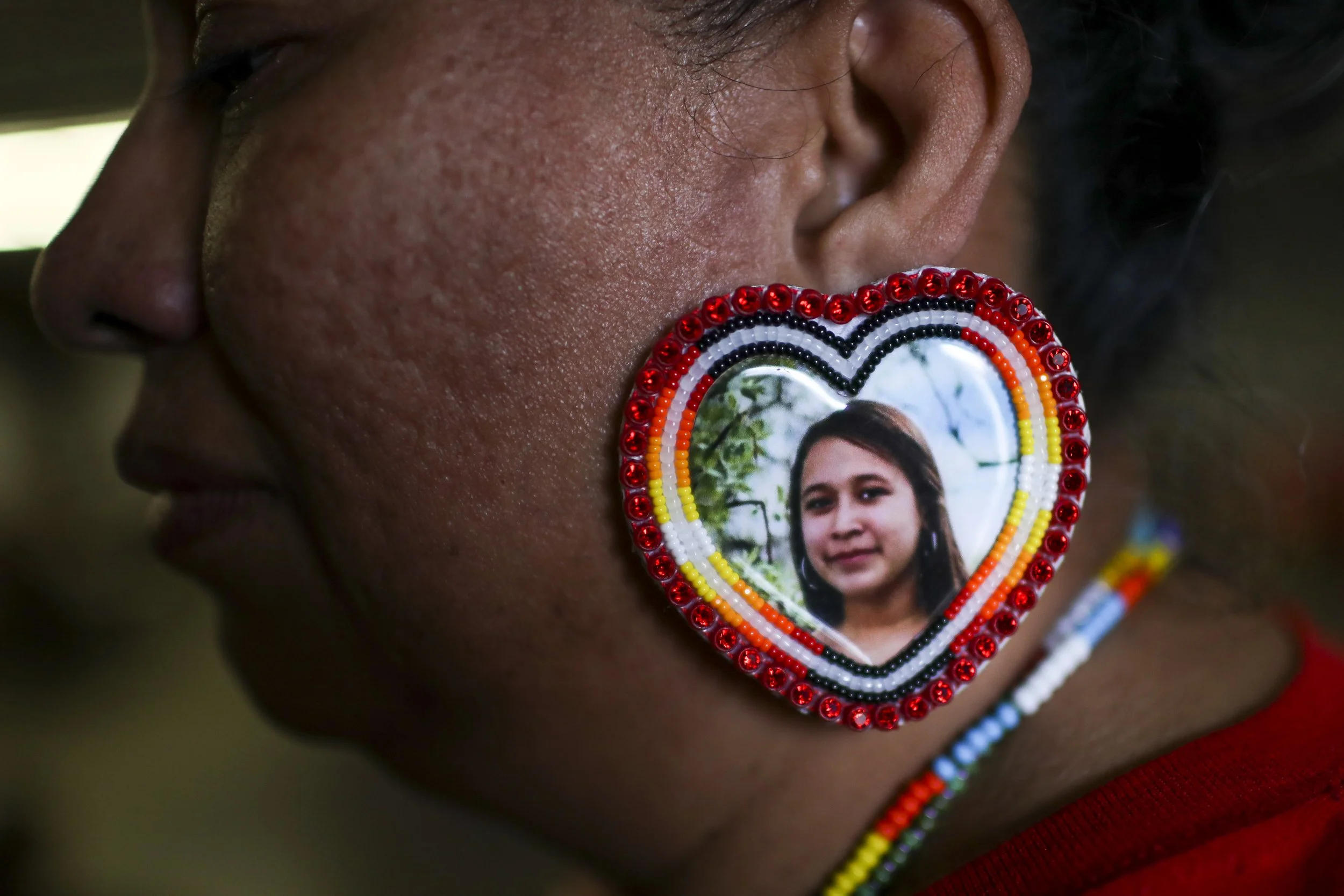
Credit: Tailyr Irvine (Salish and Kootenai)

Credit: Jenny Irene Miller (Inupiaq/Kingikmiut)

ILLUMINATING COMPLEX ISSUES

The Indigenous Futures Survey, published in 2020, surveyed over 6,400 Indigenous peoples and found 5 priorities identified by Native people as important and crucial to solve:
  • Ending violence against Native women, children, and LGBTQ2S relatives
  • Improving the mental health of Native peoples,
  • Caring for our elders
  • Preserving Native languages and cultures
  • Protecting the land and water.

Each of these issues are complex and multifaceted and represent an opportunity to explore, comment, and illuminate these issues among Indigenous communities. We hope you can review, reflect, and learn from the stories shared by the Indigenous creators.

THE VIRTUAL GALLERY

The following virtual galleries contain select content and images from the original. Use the menu to navigate to each photographer’s work. Click on any image to view it full size. Visit each photographer’s platform to see more of their work.

ELDER CARE

Alejandra Rubio (Yavapai-Apache Nation)

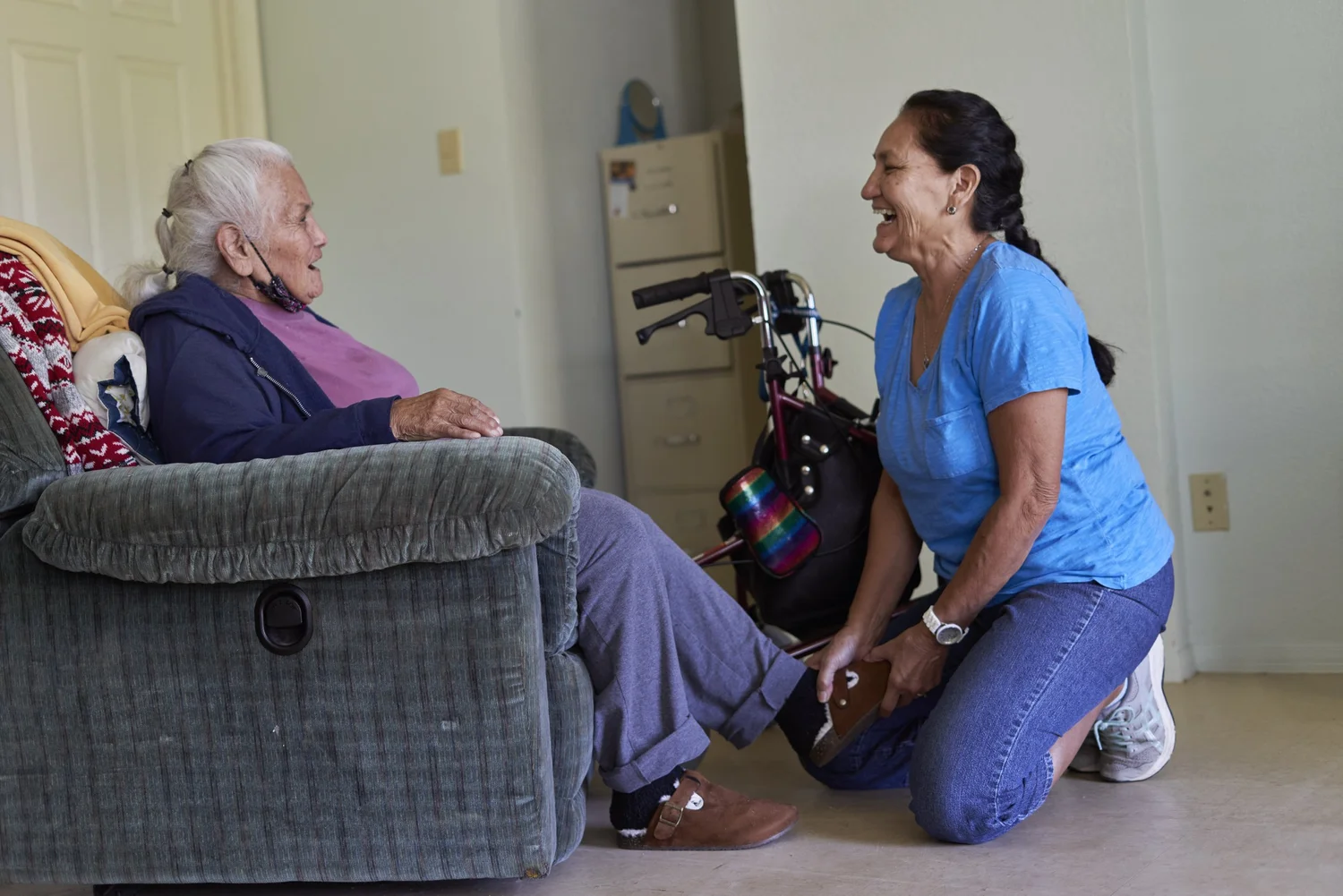
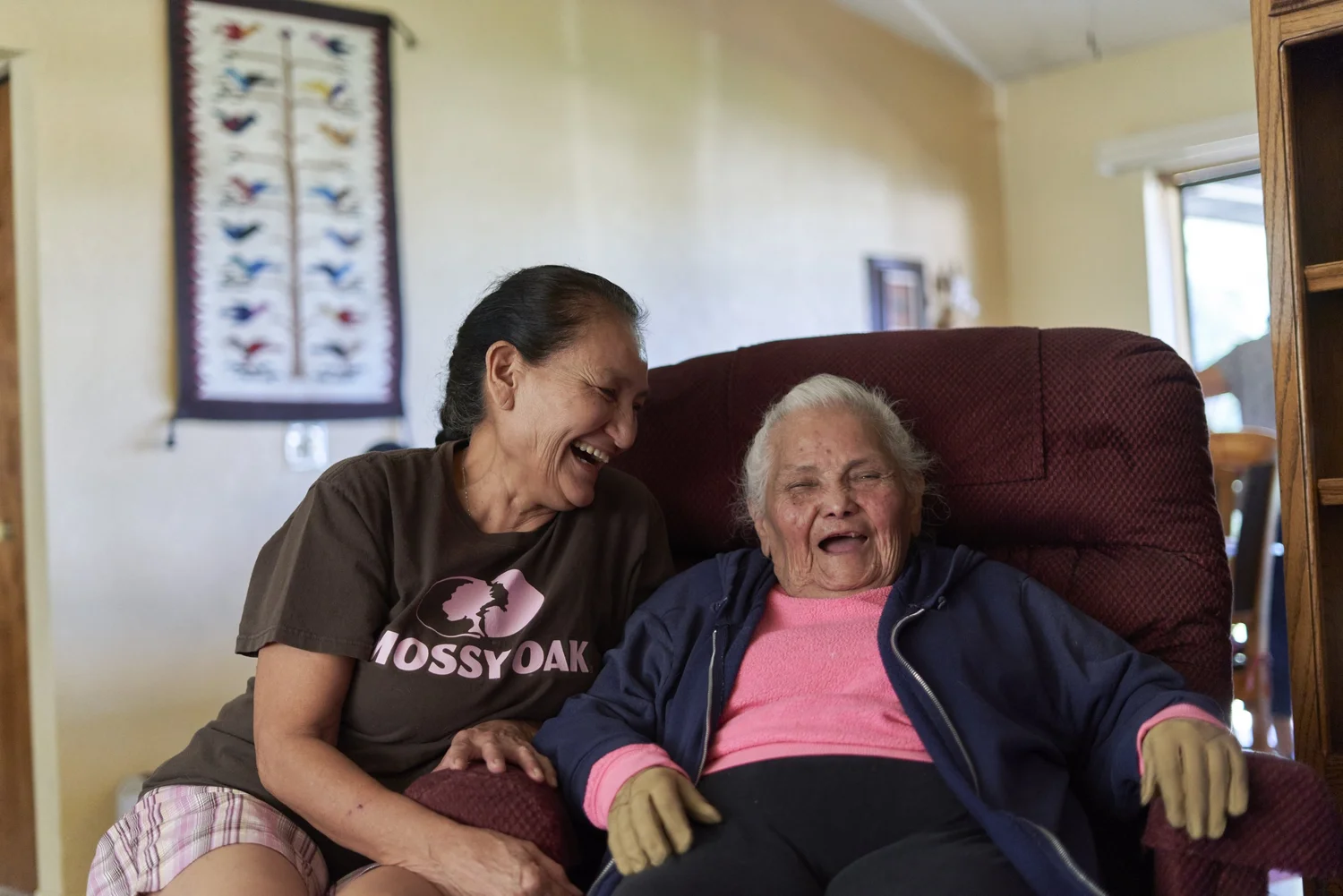
The Yavapai-Apache Nation has 321 elders enrolled; 150 out of that live within the Nation’s community. The Nation only has two elder Advocates, and its become very difficult for them to take care of every elder in the Nation. One Yavapai-Apache Elder, who is registered with the senior program, would get meals every other day and has a hard time getting help in making meals on the days that she doesn’t get a delivery. She would have family come in to help when they are on lunch or have the day off. At times she would be left alone in her home, with no visitors on site. Luckily for her, her daughter-in-law had moved her into her own home to take care of her entirely. With the elder’s son passing a few years back, her daughter-in-law not only takes care of her, she also had taken in her own mother. The elder’s daughter-in-law opened up her home to talk to her about her challenges while caring for both elders.

She helps with any daily actives that include a range of movements. She also let both elders do things on their own until they needed more and assistants. When making doctor’s appointments, she has to make sure she can get them both in at the same time. In her younger days, the Yavapai-Apache Elder was and still is the primary source for the Nation when it comes to culture. She has made Apache boots, buckskin dresses, beaded work, and kept the Apache language alive. He has taught the Nation’s younger generation how to speak and make their regalia wear. To this day, she is still going out picking red berries, shopping for her next project, and helping others learn.

Visit Artist Website

YANA ACHIK – WHERE THE LIGHT AND DARKNESS MEET

Eli Farinango (Kichwa-Otavalo)

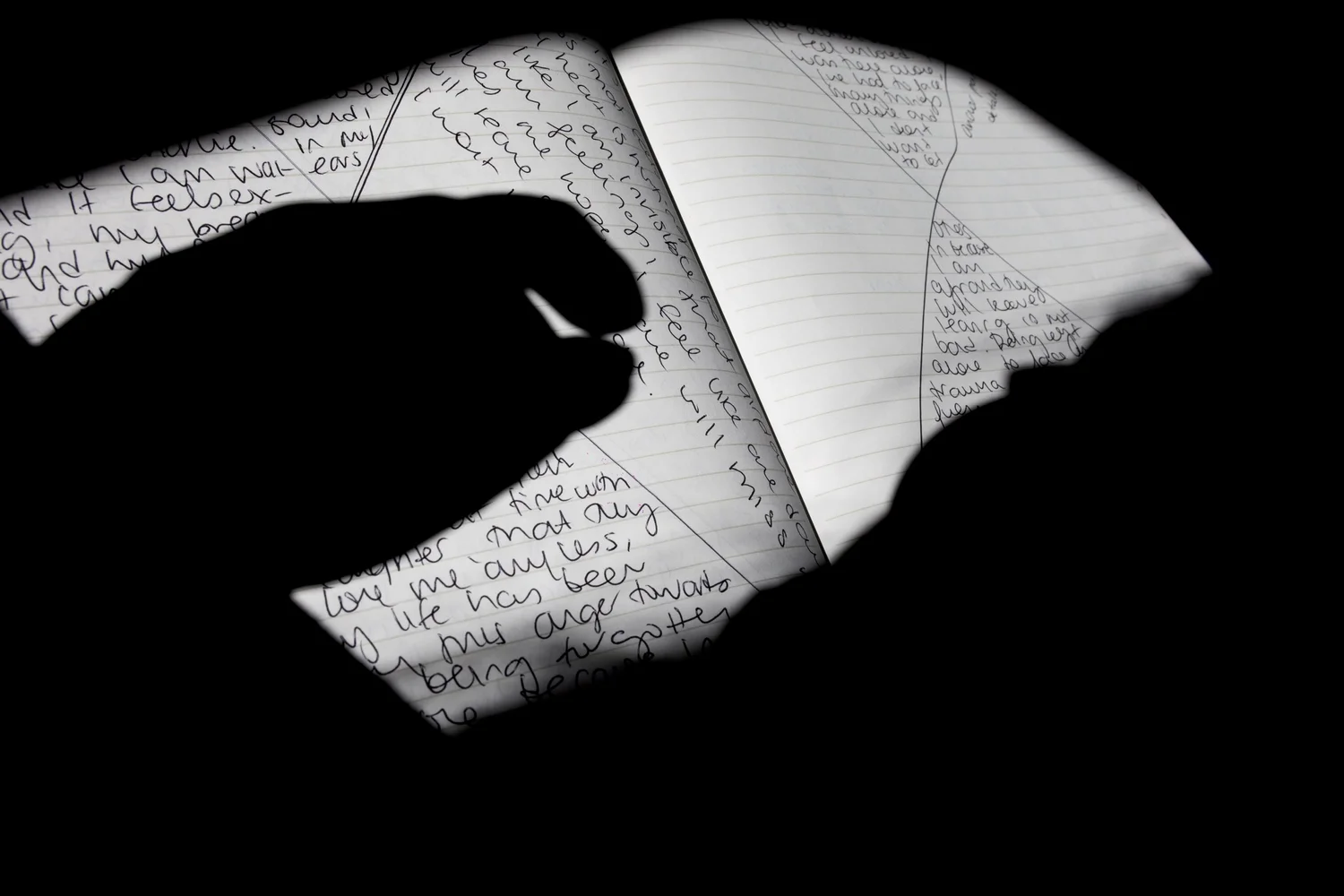
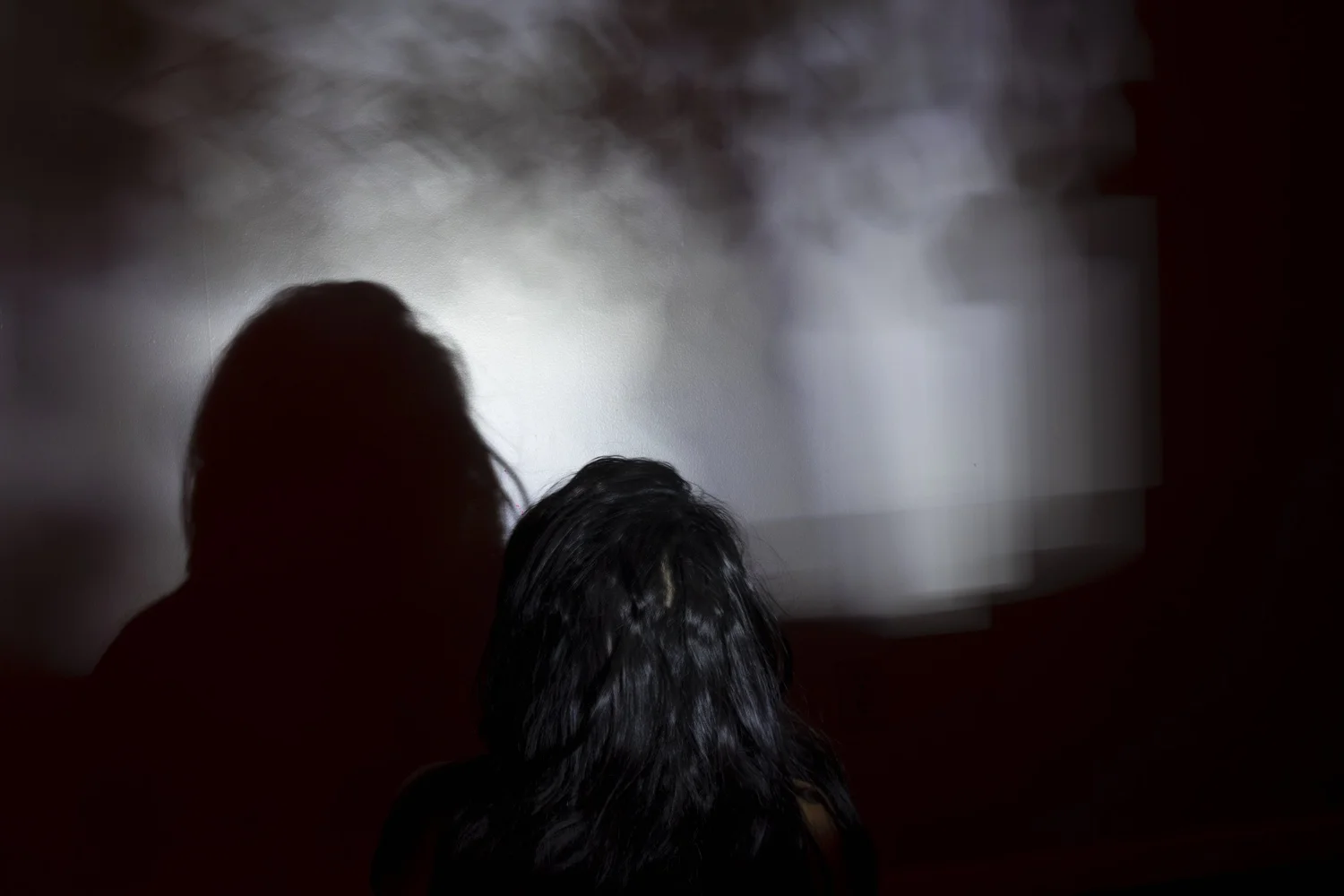
yana achik : where the darkness and the light meet – is a personal narrative that speaks about mental health, the emotional experience of being diagnosed and the search for healing in traditional indigenous practices. In 2020, a few days before the world went into lockdown, I was diagnosed with borderline personality disorder, complex post traumatic stress syndrome and depression. Through my failed attempt to access services through my local hospital I became aware of the urgent need for culturally sensitive services and for the unique experiences of racialized bodies to be included in conversations of mental health.

In Kichwa, ‘yana’ means “darkness, black, and the great emptiness that exists in the universe.” I have always used the word ‘yana or darkness’ as a metaphor to describe the depressive states that my body goes through. Guided by my personal ceremonial practices, the guidance of my ancestors, the elements, dreams and spirits, this past year I embraced the idea of shadow work and allowed myself the space to embrace this darkness and solitude.

In my community, we often refer to our godmothers as “achik mamas”. The word ‘achik’ means light; our godmothers are meant to be our ‘guides of light’ throughout our lives. After a year of learning to live with my diagnosis, I began imagining ‘yana achik’ as my chosen godmother. The darkness and light became the guides that led me to narrate my experience, to trust my voice, and to see beauty in the transformation my mind and body go through.

Visit Artist Website

Click on each image to read the story.

Conversations with the self

Referral to the Borderline Personality Disorder Service | Hamilton, Canada. November 5, 2020.

Looking outside for hope | Bethlehem, PA. October 11, 2021.

Hamilton, Canada. January 29, 2021.

THE SEED KEEPERS

Kalen Goodluck (Three Affiliated Tribes, Diné, Tsimshian)

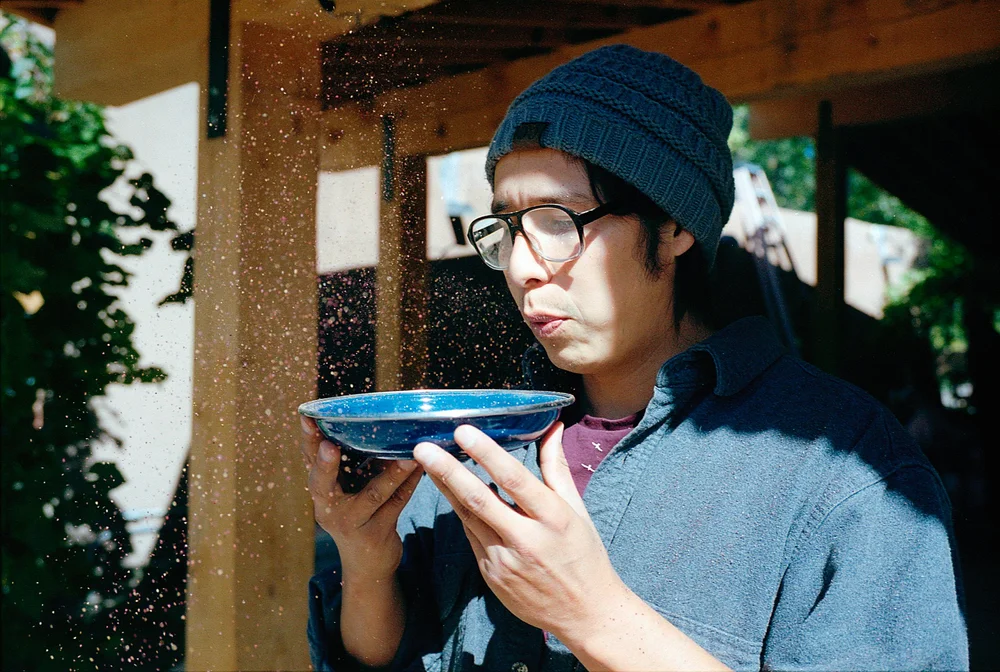
In mid-October 2021, Santa Clara Pueblo seed keeper Roxanne Swentzell began processing red amaranth for its quinoa-like black grain, seeds the size of specks of sand. With the help of dedicated volunteers, she recently built an adobe seed bank at her non-profit, Flowering Tree Permaculture Institute in Española, New Mexico, which serves Santa Clara Pueblo and offers classes on farming and seed keeping. Once the shelves are installed, the thousands upon thousands of seeds stored in pots and jars will find sanctuary within its walls.

Just 24 miles to the north, Emigdio Ballon, who is Inca descendent and Quechua from Bolivia, an expert in plant genetics and breeding in high-altitude crops, has been hard at work harvesting green and red cayenne chiles at the Pueblo of Tesuque’s farm and seed bank, which he oversees. The crops are all for the pueblo, which has been rocked by draught for the last two years, yet traditional food still manages to grow.

Many heritage seeds were nearly lost when their Indigenous caregivers were torn from their homelands by US settler colonialism. These two elders, guardians of heirloom seeds, are part of a burgeoning constellation of Indigenous seed keepers who steward corn, pumpkin, squash, sunflowers, tomatoes and more—all Indigenous heirloom varieties, the result of centuries of careful breeding by Indigenous ancestral communities.

Today, seeds must be protected and passed down, just as they always have. “Now you are the keeper of those seeds,” Swentzell tells interested young ones. “Those are our crop seeds.”

Visit Artist Website

LONO TO KŪ CEREMONY

Kapulei Flores (Kanaka Maoli)

Photographed: March 13, 2021
Location: Pelekane Beach, Hawaiʻi Island

Within Hawaiian culture, there are gods and deities associated with the different elements of nature who are acknowledged and honored through ceremonies, hula (dance), chants, and prayers. These cultural rituals have been passed down through the generations and are still being conducted today. Many of these hula, chants, and prayers have been perpetuated from our ancestors through oral accounts that were later recorded in written form.

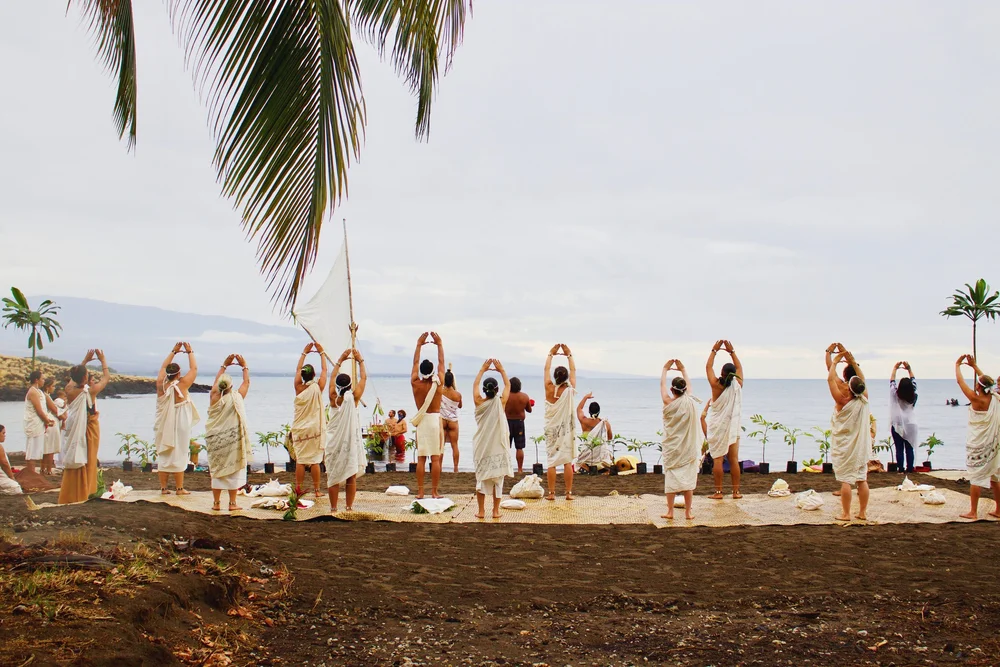
Captured in these photos, taken below Puʻukoholā Heiau on Hawaiʻi Island, is a beautiful ceremony that honors the transition between the seasons of Lono and Kū. Lono is connected to the wet season, agricultural practices, fertility of the land, and the period called Makahiki. Whereas, Kū is associated with strategy, strength, and the dry season. Symbolic aspects grounded in tradition are incorporated in this ceremony through the use of kiʻi (wooden images), waʻa (canoe), and participants’ attire. The waʻa goes out into the ocean with the Lono kiʻi being held high and returns to Pelekane Beach with the Kū kiʻi being held in the same manner, affirming the shift from Lono to Kū. Just as the kiʻi are switched, chanters and dancers change their attire from white to red, colors that are associated with each respective god.

Ceremonies like this seem to transport me back to the time of my kupuna (ancestors), a feeling so ancestral I feel it in my koko (blood), puʻuwai (heart), and naʻau (gut). Ceremonial protocols such as this strengthens our connection to our culture and traditions throughout the year.

Visit Artist Website

PRESERVING TRADITION THROUGH HIDE TANNING

Jaida Grey Eagle (Oglala Lakota)

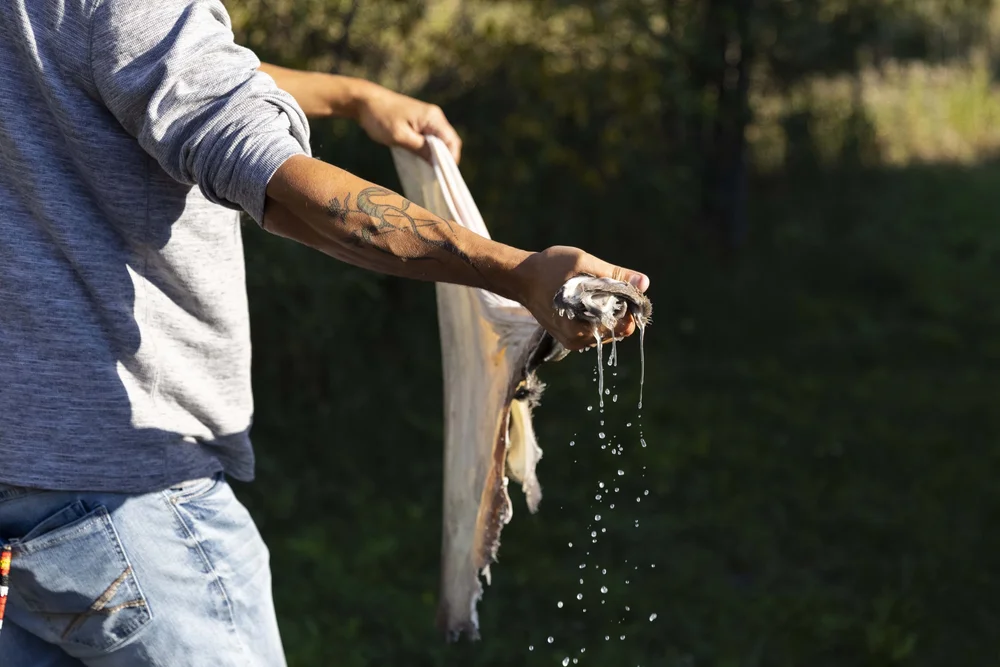
The art of processing animal hide, also known as brain tanning is a class and a sharing of knowledge taught by Greg Johnson, an Anishinaabe teacher through the North House Folk School. Although my family has passed down other forms of traditional knowledge, tanning hide is one we’ve lost. This opportunity brings me back to understanding my own culture while learning in community. I took this class earlier this fall as a way of reconnecting as I’ve always been curious about the process. I often use smoked hide in my own work and have coveted learning the process. Processing hides was and continues to be a traditional art that Indigenous people have depended upon for so many aspects of our lives. The class was taught over a three day period on the Grand Portage reservation in northern Minnesota. Through this class students are taught how to fully process a deer hide from the beginning.

Day one begins with skinned deer hide, and each hour of the day is dedicated to the process. Greg Johnson is known in his community and he is often gifted various hides from people on his reservation but is also an avid hunter. Throughout the class Greg has many teachings about indigenous culture, one that in particular will stay with me was about how he was always taught to treat the animals with the utmost respect. He talked about how our ancestors used to use every part of the animal, not just kill them for their meat and the animals have given their lives so that we could survive. He was taught by his elders that the animals actually pity us humans and that they gift us their hides so that we can stay warm and protect ourselves. During the class a local elder came by to say hello and said that when she was younger, everyone in their tribe knew how to tan hide and she’d see hide stretched out on frames throughout the area and now she never sees it anywhere.

Although there were many students in attendance and working together, the process was long and arduous. The ending product is a gorgeous golden colored smoked and tanned hide that can be used for many projects, including moccasins, knife sheaths, beadwork, jewelry, bags, medicine bundles, etc. The hide holds a unique smell of smoke that it retains from the smoking process. The hide is a treasured item after so much hard work and dedication brought it to its final iteration.

Visit Artist Website

CONTINUOUS, 2015-2019

Jenny Irene Miller (Inupiaq/Kingikmiut)

Continuous is my small inquiry into the large question: how do we as Indigenous peoples decolonize our sexualities, gender identities, and the way we treat individuals who identify outside of the pervasive binary of male or female? I have replied to that question with this portrait series featuring peoples who identify as being part of the Indigenous lesbian, gay, bisexual, queer, and Two-Spirit (LGBTQ2+) community. I am part of this series and so is my brother. My hope is that this project will inspire dialogue within our communities on how to make those spaces safer and more welcoming for our Indigenous LGBTQ2+ relatives.

Continuous explores identity, sexuality, gender diversity, discrimination, and pride and how those elements overlap, diverge, and inform each other. This work is personal and communal. It is the product of the many years it took me to overcome the internalized hatred and fear of my own identity and sexuality. It is in the unity and diversity of the Indigenous LGBTQ2+ community where I found the strength to be who I am today. The individuals shown here are a small sampling of that large and variant group. While we are indeed incredibly diverse, we also share many commonalities. Some I have known since childhood, others I have met as a young adult, and some are new and now cherished friends.

By identifying an Indigenous LGBTQ2+ community, Continuous connects us to a growing global community of Indigenous LGBTQ2+ people. Through knowing who we are and establishing ourselves through this project, we can lend support to one another. I must stress that although the individuals in this series were willing to share their identities and stories, some LGBTQ2+ people cannot safely do so, because of the discrimination that exists. This project is also for them, to be one building block of a world where they can live their lives authentically, as they feel best.

Visit Artist Website

Click on each image to read a statement from the subject.

Anthony Capo, 2016

Red, 2016

Toini Anna-Liisa Alatervo, 2016

PROTECTING WATER ON THE KLAMATH RIVER

Paul Robert Wolf Wilson (Klamath, Modoc)

Words and images by Paul Robert Wolf Wilson
With support from the Klamath Tribes Research Station

Hydroelectric Dams are a common sight throughout the world. Hydroelectricity has been pushed as a sustainable source of clean energy- a path forward to meet the energy dependence that developed nations continue to grow.

As with many energy technologies in our society, hydroelectric dams have not been studied comprehensively before being implemented at large scales. Historically, the construction of hydroelectric dams have led to the collapse of environments and traditional food systems, often violating the treaties of indigenous peoples and the United Nations Declaration of Rights of Indigenous Peoples.

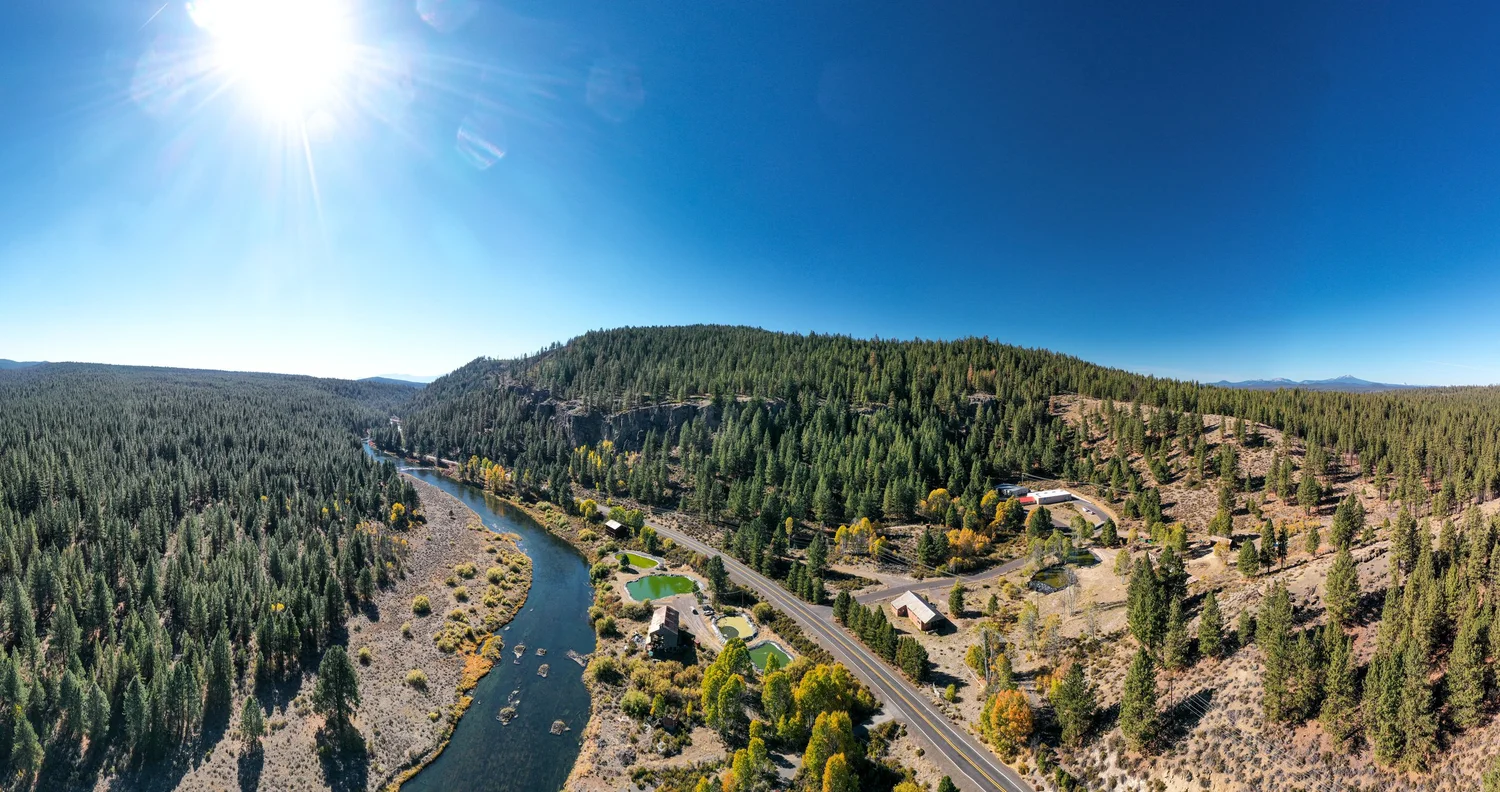
Ashia Grae Wolf Wilson, a 19 year-old Klamath and Modoc Tribal member won an undergraduate research project at the University of Oregon, where she attends as an undergraduate Ford scholar. She spent the summer studying the nuances of methane emissions from hydroelectric dams on the Klamath River, a crux the international community is confronted with as a false climate solution. She set out to understand the standards by which the governing bodies within the basin measure the methane emissions throughout the Klamath River.

The findings of her research have shown that there is no standard for measuring methane emissions on the Klamath River. Despite methane emissions being 81 times more detrimental at times than CO2, the States, Counties, Federal Government, and parent companies did not engage in meaningful research to understand the environmental impacts that the hydroelectric dams were emitting.

Dams are still considered clean energy by the UN and major countries that set international energy policies. Hydroelectric projects continue to be funded through systems like the UN’s Clean Development Mechanism, digging the climate crises hole further as a false climate solution.

Ashia’s scholarship and continual activism work has hinged on removing dams as clean energy in international policies, while the largest dam removal in history is slated to take place on her ancestral river in 2023.

Visit Artist Instagram

BLACKFEET BOXING

Tailyr Irvine (Salish and Kootenai)

Frank Kipp knows that teaching children to box is no more than a Band-Aid for the epidemic of missing and murdered Indigenous women and girls who are slain at 10 times the national average. However, options are limited when the justice system fails to protect the country’s most vulnerable populations.

Individuals are forced to defend themselves. For Kipp, that means using his boxing gym to teach young women, like his daughters, to fight. For the community, it means using every holiday, parade and event to not only celebrate but to also demand justice for their relatives.

The ghosts of the missing and murdered women refuse to be forgotten. They are silent guests at every function on the Blackfeet Indian Reservation — present in Kipp’s boxing gym, watching from the sidelines of celebrations, waiting in every parent’s constant fears.

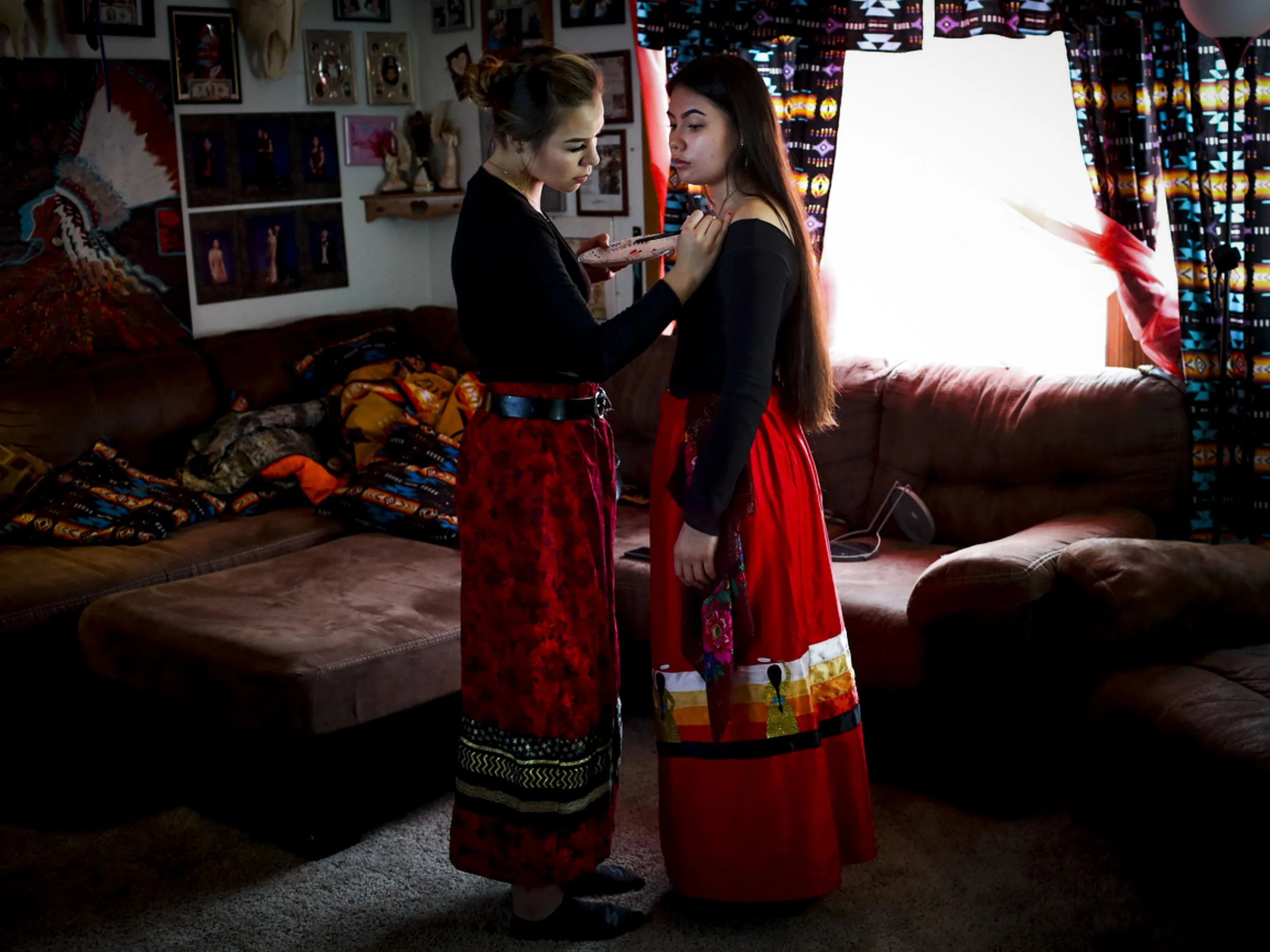
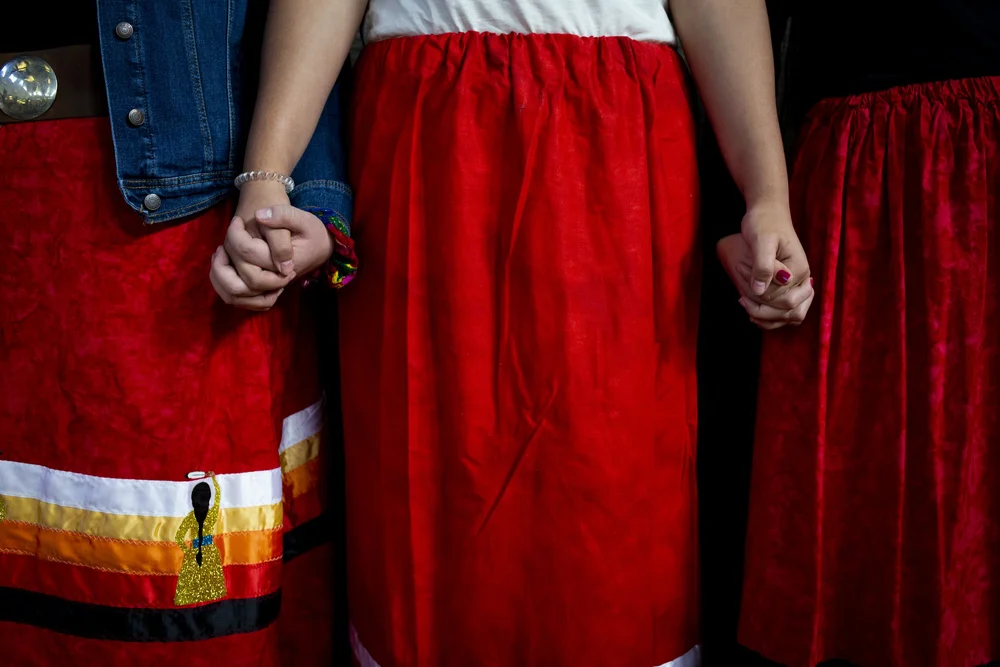
A group of teenage girls in colorful ribbon skirts — led by Kipp’s daughter, Donna — gathered in the cafeteria of Browning High School to talk about the crisis. They’re not quite adults, but they know the statistics that surround them.

Some girls box, some wear ribbon skirts, and some think nothing will happen to them. But whether they learn to fight or face the ghosts does not matter. What matters is why this crisis has gone largely unexamined by the justice system since this country’s inception. It is crucial that Indian Country does not accept teaching Indigenous children to fight as an answer to the epidemic. It is a Band-Aid, and Band-Aids cannot heal murder.

Visit Artist Website